
A Neurodivergent Day Trip to London: Planning Around Energy, Access and Reality

A day trip to London sounds simple.
Book the train.
Pack a bag.
Head into the city.
But when you live with Autism, ADHD, Functional Neurological Disorder, chronic fatigue, and a mobility scooter with a limited battery life, a “simple” day out becomes a carefully balanced energy equation.
This is what a day in London looks like when you plan it around access, sensory needs, rest breaks, and the reality that your body might change the plan at any moment.
Booking Passenger Assistance for the Train
My son is studying just south of London, and since September we’ve done a few day trips on the train from Manchester. This time, instead of struggling, I booked Passenger Assistance to help me on and off the train.
It was straightforward to arrange through the app. You create an account (including a photo so they can spot you), then enter the help you need. For me, that meant a ramp, my mobility scooter, and crutches.
Once my train tickets were booked, I added the journey to the app and confirmed everything. An email came through shortly after to validate the booking.

We arrived at the Assistance office at Manchester Piccadilly 30 minutes early, as advised. We were escorted to the train and even given better seats - ones with space for my scooter so I didn’t have to fold it. I also got an alert that my seats had been updated so staff at London Euston would know exactly where to find me.

I downloaded a few episodes of the series we’re currently binge-watching to help pass the time.
At London Euston, a member of staff met me at my seat, set up the ramp, and I wheeled myself onto the platform. It was steep - but manageable.
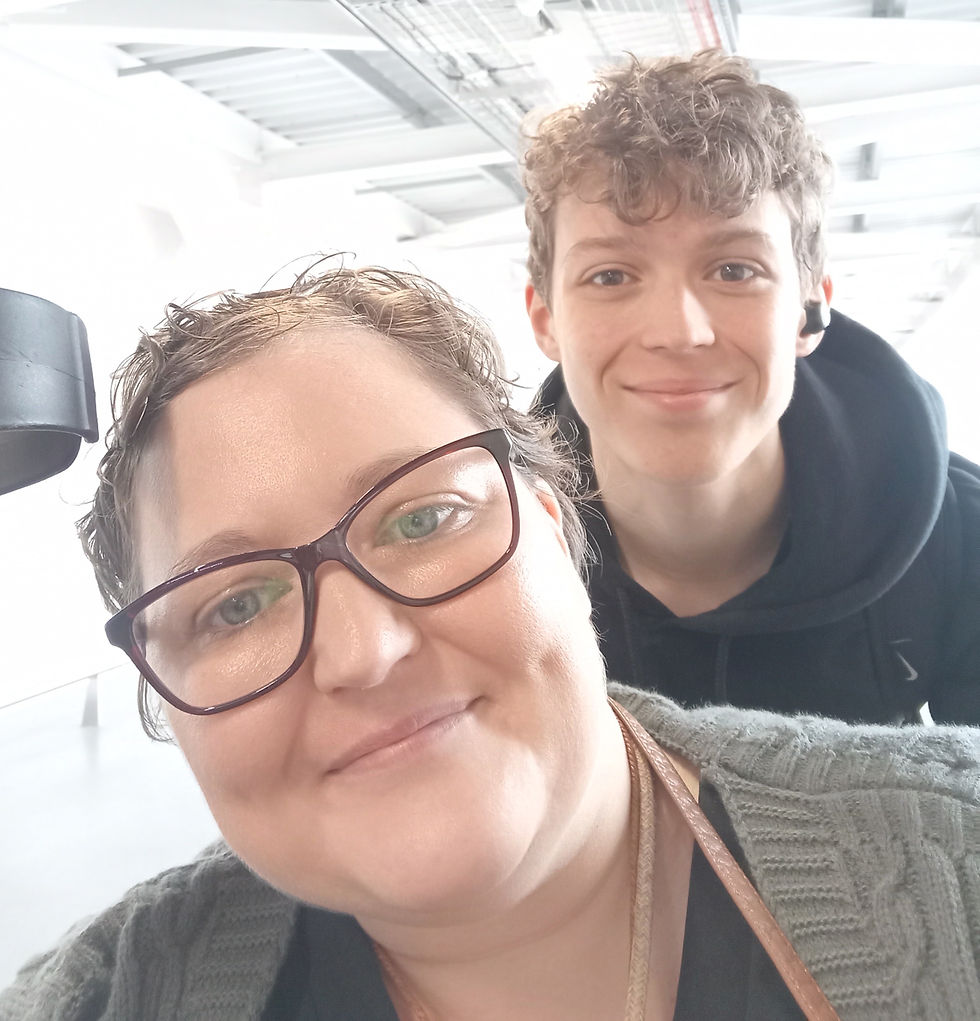
We met up with my son, and he and my daughter headed off for their day together - shopping and activities - while I took the day at my own pace.
Planning a London Day Around Energy, Not Just Activities
To make the day work, we’d had lots of conversations beforehand about what wouldn’t feel overwhelming.
We had:
Plan A: shopping and the theatre
Plan B: the Mundo Pixar experience and shopping
Both ended with meeting up at Pizza Express for dinner.
With Autism, ADHD and FND in the mix, I planned for all of us. Flexible options, low pressure, and nothing that had to happen.
For me, the focus was energy - mine and my scooter’s.
Managing Mobility Scooter Battery and My Own Energy Levels
Not all Underground stations are accessible, so I chose to stay above ground. I picked one shop, somewhere for lunch, and a nearby park to rest in the afternoon. Everything within about a mile. I knew I had around 12 miles across two batteries - but that can disappear quickly.

I stayed on pavements, browsed my one chosen shop (and made a few cheeky purchases), then headed to lunch.
I’ve learned that most cafés and fast-food places have plug sockets, so I deliberately chose somewhere I could sit, eat, and recharge - both myself and my scooter - for an hour.

After that, it was a short five-minute scoot to a park I’d found the day before while zooming in on maps, planning distances and rest points.
Sitting in the park?
That’s me recharging.
When FND Shows Up Mid-Trip
By 3pm, I was wishing I could have a little snooze in the sun - but resting quietly with the warmth on my face felt like a good second option.
Then the sun disappeared, the air turned cold, and it was time to find a coffee shop.
I chose a Costa - reliable, predictable, and exactly what I needed. The staff brought out a ramp so I could get inside.
And then… the head wobble.

FND had decided to join the day.
Top tip: even if you’re sitting in, ask for a takeaway cup - hot drinks and FND tremors are not a great combination.
Accessibility Wins… and a Few Frustrations
I’d already booked Pizza Express - choosing a location that worked for both plans, my resting spots, and getting back to Euston in time.
Booking ahead meant I could request an accessible table, ensuring space for my scooter and no stairs.
It was also a big moment for my daughter - her first visit since being diagnosed with coeliac disease.
We’d checked the menu in advance, and she felt ready to try the gluten-free options. For her, even a tiny amount of gluten can cause a 24 - 48 hour reaction, so this mattered.
I’ll always advocate for us. If something doesn’t feel right, I’ll ask for changes. Sensory-wise, a table in the middle of a busy restaurant would have been too much - but thankfully, that wasn’t an issue.
(And a side note: if you have specific needs, it’s always worth phoning ahead. Online bookings don’t always cover everything.)
We were seated in a booth near the front - just enough space to tuck my scooter out of the way.

The kids spent nearly an hour showing me photos and telling me about their day.
They’d had the best time.
And honestly - that was the whole point.
The journey home was… less smooth.
We checked in with Passenger Assistance at Euston, waited as instructed, then were sent to platform 6. We were told to wait at carriage J due to a broken bathroom in our assigned carriage.
We waited.
Other passengers boarded. Other assisted passengers were helped on.
We were still waiting.

After going back to ask for help, I was eventually directed again to carriage J - but in the end, I was seated in my original seat, next to the broken bathroom.
Not ideal.
But the train manager was brilliant - checking in regularly and even standing guard when I needed to use the toilet.
We arrived back in Manchester with a delay, but with assistance waiting at the correct door.
Why Planning Ahead Makes Travel Less Exhausting
Before all this technology, we would have just “winged it.”
And sometimes, that still works.
But I’ve learned that a bit of planning - the right kind of planning - makes the difference between surviving a day and actually enjoying it.
Not rigid plans.
Not pressure.
Just gentle structure.
Options.
Exit routes.
Rest built in.
No masking.
No pushing through.
Just meeting our needs as they are.
And maybe that’s the real takeaway from the day…
Accessibility isn’t just about getting from A to B.
It’s about creating a day that’s actually liveable - and even enjoyable.
If you have any questions about planning, pacing, or using Passenger Assistance, feel free to reach out - I’m always happy to help.
JuJu x
If this resonated with you, you might also find these helpful:

Comments